

 Verified
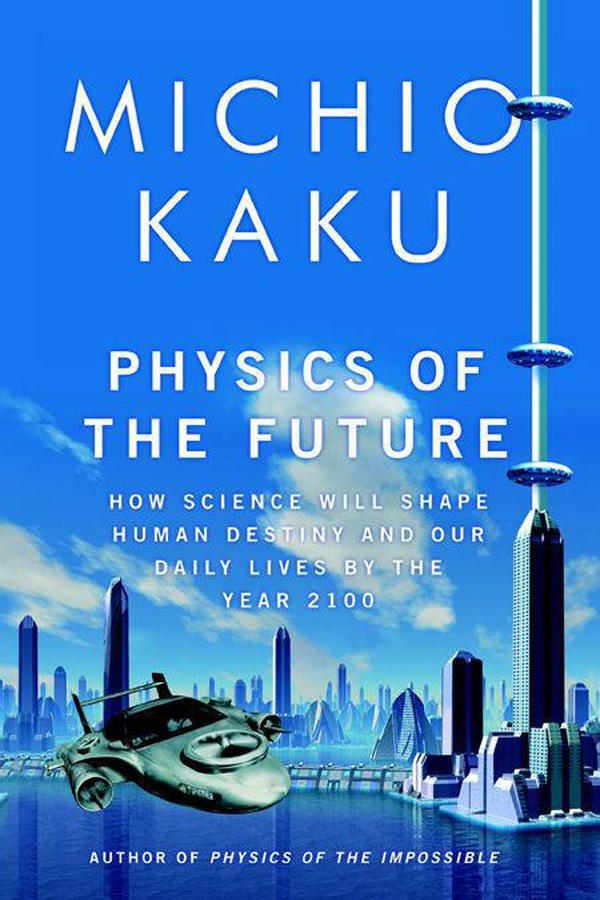
Michio Kaku - Physics of the Future
-
-
 Device:
iPhone | iPad | Nook | Sony | Kobo
Device:
iPhone | iPad | Nook | Sony | Kobo
-
 File Format:
EPUB
File Format:
EPUB
-
 Size: 1.15 MB
-
-
-
 Version: 5.0
-
 Added: Sep 22, 2021 (4.6 Yrs Ago)
-
This title is only available to members
Login
Payment Methods


Information

support@freebookr.com
 Go top
Description
Envision, if you're able to, the planet within the year 2100.In Physics of the Future, Michio Kaku—the Ny Times-Bestselling writer of Physics of the Impossible—gives us a sensational, sexy, and exciting perspective of the coming millennium centered on interviews with around 3 hundred of the world’s top researchers who're currently creating the future within their laboratories. The end result may be the most respected and medically correct explanation of the groundbreaking improvements happening in medicine, computers, artificial intelligence, nanotechnology, energy generation, and astronautics.In all probability, by 2100 we shall manage computers via small mind devices and, like magicians, move items around using the strength of our thoughts. Artificial intelligence will be spread through the atmosphere, and Internet-enabled contacts will permit us to gain access to the planet's data foundation or create up any picture we wish within the flash of an eye.Meanwhile, cars will drive themselves utilizing GPS, and if space-temperature superconductors are found, automobiles will efficiently travel on a cushion of air, coasting on effective magnetic fields and ushering in age magnetism.Using molecular medicine, researchers will have the ability to develop nearly every organ of your body and cure hereditary disorders. An incredible number of small DNA devices and nanoparticles patrolling our body cells will quietly check our anatomical bodies for the very first sign of disease, while fast developments in genetic analysis will allow us to decelerate or possibly even reverse aging, permitting individual life-spans to improve dramatically.In room, significantly fresh ships—needle-sized ships utilizing laser propulsion—could substitute the costly chemical rockets of today and possibly visit nearby stars.
Read More